

Product Details
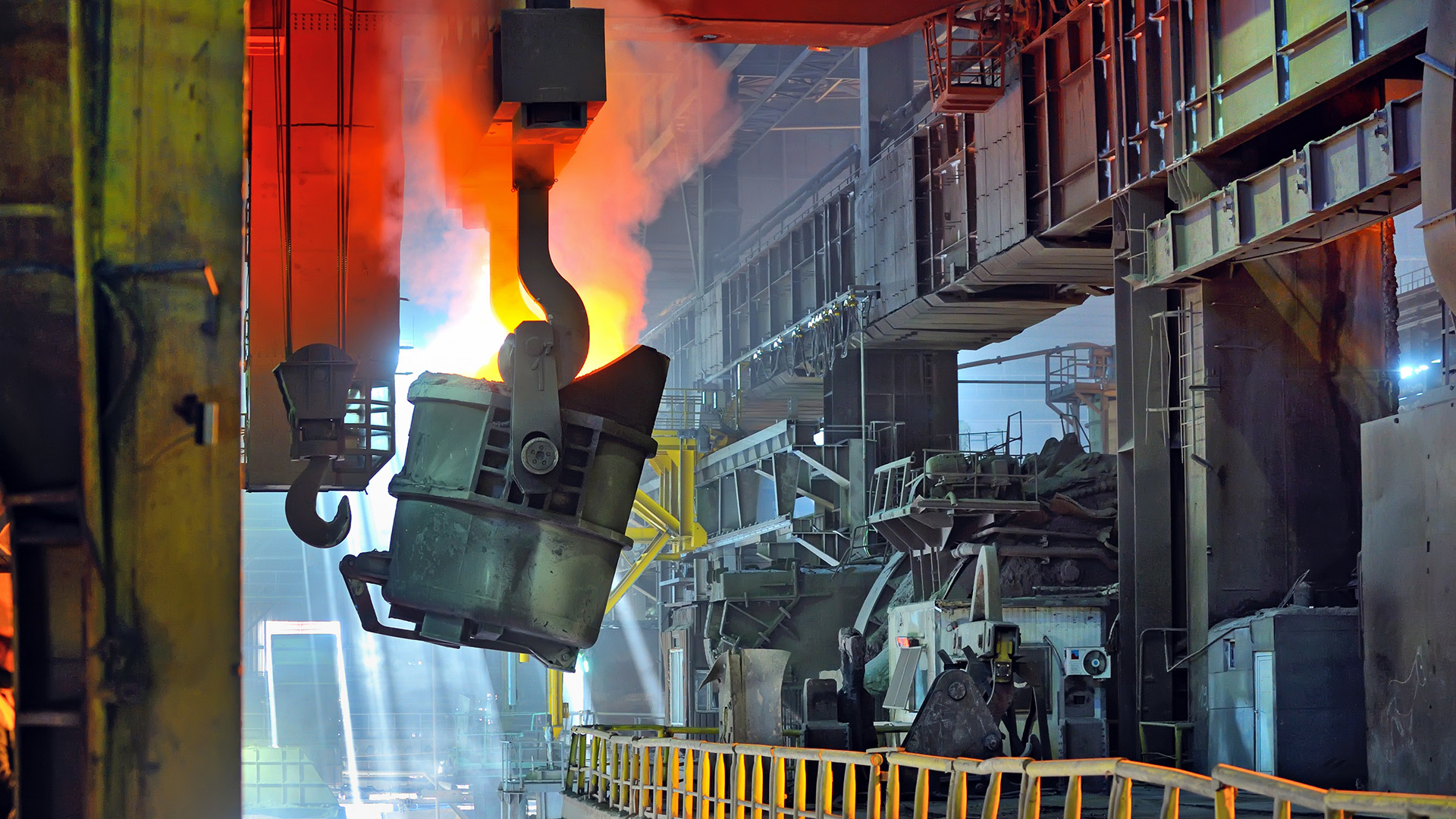
A special steel enterprise specializing in the production, research and development and sales of high alloy steel forgings
Internal Gear
Key words:
Classification:
Internal Gear
1. Definition
An internal gear (also known as ring gear) refers to a gear with teeth distributed on the inner surface of a hollow cylinder or cone. It engages internally with external gears (pinions/planetary gears) to transmit motion and torque, serving as a core component in planetary gear systems.
2. Working Principle
- When an external gear (driver) meshes with an internal gear (driven), they rotate in the same direction (opposite for external meshing).
- Typical application: In planetary transmission, the internal gear acts as a fixed or rotating ring gear, while planetary gears roll inside it to achieve high reduction ratio, compact structure, and high torque output.
- Transmission ratio formula: i = z₂/z₁ (z₂ = number of teeth of internal gear; z₁ = number of teeth of external gear; z₂ > z₁).
3. Core Advantages
- Compact structure: Concentric arrangement saves axial/radial space, suitable for confined installation scenarios.
- Higher load capacity: Larger tooth contact area provides 25% higher load-bearing capacity than external gears, with longer service life.
- Smooth transmission: High meshing overlap ratio ensures low noise, low vibration, and low friction.
- High efficiency: Minimal sliding loss in internal meshing results in mechanical efficiency of 95%~98%.
4. Key Limitations
- Complex manufacturing process (difficult internal tooth cutting/grinding) leads to higher cost than external gears.
- Prone to involute interference, trochoid interference, and radial interference; design must strictly control the tooth number difference (z₂ - z₁ ≥ 10~17).
II. Product Types (Classified by Tooth Profile/Structure)
1. Cylindrical Internal Gears (Most Common)
(1) Spur Internal Gear
- Tooth profile: Straight teeth, parallel to the axis.
- Features: Simplest structure, easy processing, low cost, high efficiency; slightly higher noise under high speed/heavy load.
- Applications: General planetary reducers, gear pumps, low-speed transmission mechanisms.
(2) Helical Internal Gear
- Tooth profile: Helix angle β = 8°~20°, teeth inclined to the axis.
- Features: Progressive meshing, high overlap ratio, quiet operation, high torque, impact resistance; generates axial force, requiring thrust bearings.
- Applications: Automotive gearboxes, precision reducers, new energy electric drives, industrial robot joints.
(3) Double Helical Internal Gear
- Tooth profile: Symmetrical left-right helical teeth that offset axial force.
- Features: No axial force, extremely high load capacity, ultra-smooth operation; most complex processing and highest cost.
- Applications: Heavy machinery, wind power, marine vessels, high-speed and heavy-load transmissions.
2. Bevel Internal Gear
- Tooth profile: Inner surface of a cone, used for intersecting shaft (mostly 90°) transmission.
- Applications: Differentials, steering mechanisms, aerospace angular transmission systems.
3. Special-Structure Internal Gears
- Ring Gear: Hubless, pure annular shape, standard component in planetary systems.
- Hubbed Internal Gear: Equipped with a central hub/keyway for shaft connection and fixed installation.
- Sector Internal Gear: Cut from a full ring, used for oscillating transmission (e.g., manipulators, valves).
- Plastic/Nylon Internal Gear: Lightweight, self-lubricating, low-noise, used in home appliances, office equipment, and small transmission systems.
III. Core Technical Parameters (Essential for Design/Selection)
1. Basic Geometric Parameters (ISO/GB Standards)
Parameter | Symbol | Definition/Formula | Common Values |
Module | m | m = d/z (Pitch circle diameter/number of teeth), determines tooth size | 0.3~30mm (Standard: GB/T 1357) |
Number of Teeth | z | Total teeth on internal gear | 50~200 (Standard parts), up to 1000+ for customization |
Pressure Angle | α | Angle between tooth profile force direction and pitch circle tangent | 20° (Universal), 14.5°/25° (Special) |
Pitch Circle Diameter | d | d = m×z | Design reference circle |
Addendum Height | ha | ha = m (Standard tooth) | - |
Dedendum Height | hf | hf = 1.25m (Standard tooth) | - |
Face Width | b | Width of teeth along the axis | 5~200mm (Determined by load/space) |
Helix Angle | β | Inclination angle of helical teeth | 8°~20° |
2. Accuracy Grades (GB/T 10095 / ISO 1328)
- Planetary transmission: Common grades 7~8 for internal gears; Grade 6 for high-speed/precision scenarios; Grade 5 for aerospace/ultra-precision applications.
- General transmission: Grades 8~9; Economic grade: Grade 10.
3. Standard Specification Examples (KHK/Grainger)
- KHK Standard Internal Gear: Module m0.5~3, Number of teeth z50~200, Material S45C, Accuracy N8/N9.
- Grainger Metric Internal Gear: m0.5~2.5, z50~120, Material Carbon Steel (black oxide finish), Pressure angle 20°.
IV. Materials & Heat Treatment (By Application Scenarios)
1. Common Materials
(1) Metal Materials (Heavy Load/High Precision)
- Carbon Steel: 45# (S45C), 1045 — Universal type, quenched and tempered, cost-effective.
- Alloy Steel: 20CrMnTi, 40Cr, 42CrMo, 17CrNiMo6 — Carburized and quenched, high strength and wear resistance, used in automotive/wind power/robots.
- Stainless Steel: 304, 316 — Corrosion-resistant, suitable for food/medical/marine equipment.
- Copper Alloy: Brass (H62), Tin Bronze — Self-lubricating, low-noise, used in precision instruments and small transmissions.
(2) Non-Metal Materials (Light Load/Quiet Operation)
- Engineering Plastics: POM (Acetal), PA66+GF30 (Glass Fiber Reinforced Nylon) — Lightweight, self-lubricating, low-cost, used in home appliances, office equipment, and toys.
2. Heat Treatment Processes
- Quenching and Tempering: HB220~280, improves comprehensive strength, suitable for medium loads.
- Carburizing and Quenching: HRC58~62, hard tooth surface with tough core, for heavy-load/high-speed scenarios.
- Nitriding: HV800~1000, minimal deformation, high wear resistance, for precision transmission.
- Induction Hardening: Localized hardening, suitable for large-module ring gears.
3. Surface Treatments
- Black oxide, galvanizing, nickel plating, chrome plating, sandblasting, anodizing — Rust prevention, wear resistance, and aesthetics.
V. Manufacturing Processes
1. Blank Preparation
- Forging (Annular blank, enhances strength), Casting (Large size/low cost), Bar stock cutting (Small batch production).
2. Tooth Machining (Core Process)
- Gear Shaping (Most Common): Generating method, suitable for small-to-medium modules and batches, accuracy 7~8 grade.
- Gear Hobbing (Internal Hobbing): High efficiency, suitable for mass production, accuracy 7~9 grade.
- Gear Grinding: Form/generating grinding, accuracy 5~6 grade, used for hardened tooth surfaces and precision transmission.
- Gear Skiving: CNC turning, suitable for large modules and high efficiency, accuracy 6~7 grade (mainstream in new energy reducers).
- Wire EDM/EDM: Small batches, special tooth profiles, and thin-walled parts.
3. Post-Processing
- Heat treatment → Datum finishing → Tooth precision grinding/honing → Surface treatment → Inspection (tooth pitch, tooth profile, runout, hardness).
VI. Typical Application Fields
1. Automotive & New Energy
- Gearboxes, differentials, electric drive reducers, hybrid systems, in-wheel motors.
2. Industrial Transmission
- Planetary reducers, servo reducers, gear pumps, hydraulic motors, lifting/construction machinery, wind turbine gearboxes.
3. Precision Equipment
- Industrial robot joints, medical devices, optical instruments, ATM/financial equipment, automated production lines.
4. Home Appliances & Consumer Electronics
- Power tools, washing machines, paper shredders, printers, electric wheelchairs, fitness equipment.
5. Aerospace & Marine
- Aircraft engines, helicopter transmissions, marine propulsion systems, shipborne equipment.
VII. Selection Guide (Key Points)
- Determine Load & Speed: Calculate torque, power, and speed to select module and face width.
- Transmission Ratio & Structure: Internal meshing ratio i = z₂/z₁, z₂ - z₁ ≥ 10 (to avoid interference).
- Accuracy Grade: Grades 6~7 for precision/high-speed; 8~9 for general use; 10 for economic applications.
- Material & Heat Treatment: Alloy steel + carburizing for heavy loads; carbon steel/plastic for light loads; stainless steel for corrosive environments.
- Installation & Space: Match internal gear outer diameter, inner diameter, and face width with the housing/shafting.
- Lubrication & Maintenance: Extreme pressure gear oil for heavy loads; grease for light loads; self-lubrication for plastic gears.
VIII. Standard & Customized Product Examples
1. Standard Internal Gear (KHK SI/SIR Series)
- Model: SI1-60 (m1, z60, S45C, N8, annular).
- Specifications: m0.5~3, z50~200, accuracy N8/N9, material S45C, black oxide finish.
2. Customized Ring Gear (New Energy Vehicles)
- Parameters: m2.5, z82, 42CrMo, carburized and quenched HRC60, accuracy grade 6, face width 30mm, outer diameter 215mm, inner diameter 205mm.
- Process: Forging → Rough turning → Carburizing → Finish turning → Gear grinding → NDT (Non-Destructive Testing) → Surface treatment.
3. Plastic Internal Gear (Home Appliances)
- Material: PA66+GF30, m0.8, z72, accuracy grade 9, self-lubricating, quiet operation.
IX. Industry Standards
- National Standards (China): GB/T 10095 (Accuracy of Involute Cylindrical Gears), GB/T 1357 (Module), GB/T 3480 (Internal Gear Dimensions).
- International Standards: ISO 1328, DIN 3961, AGMA 2000, JIS B 1701.
Related Products


Consulting
Jiyuan Haiyuan Special Steel Co., Ltd.
Whatsapp:+86 15239700030
Telephone:+86 13203901015
E-mail:MaxineWei@haiyuantg.cn
Address: Steel Deep Processing Park, Huling Industrial Cluster, Jiyuan City
Copyright©2024 Jiyuan Haiyuan Special Steel Co., Ltd