

Product Details
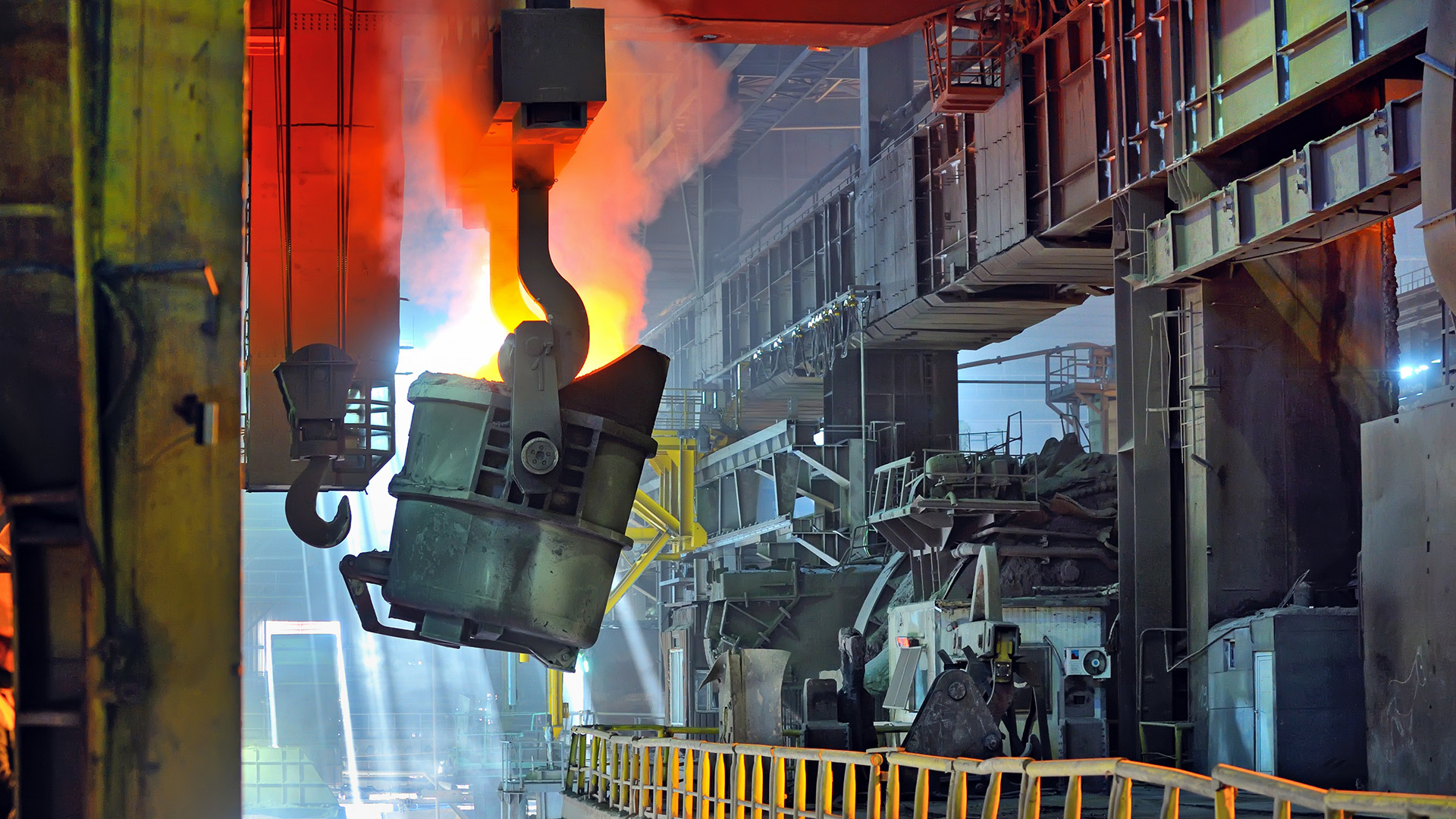
A special steel enterprise specializing in the production, research and development and sales of high alloy steel forgings
Gear Shaft
Key words:
Classification:
Gear Shaft
1. Product Description
A gear shaft is a key transmission component in mechanical equipment that combines the meshing transmission function of a gear with the supporting and torque transmission functions of a shaft. It is widely used in automobiles, machine tools, construction machinery, aerospace, wind power, and many other industries. Its machining accuracy, material selection, and structural design directly determine the operational efficiency, reliability, and service life of the entire machine. Gear shafts are generally cylindrical metal rods with different diameters at various sections. Based on application requirements, gears can be either integrated with the shaft or assembled separately, making them an indispensable basic part in various rotating machinery.
2. Material Selection
Gear shaft materials must meet the core requirement: hard tooth surface and tough core, balancing wear resistance, impact resistance, and machinability. Common materials and applications are as follows:
Medium carbon steel (e.g. 45# steel)
The most widely used material. After normalizing and quenching-tempering, it provides good comprehensive mechanical properties, suitable for general loads with moderate accuracy and speed requirements.
Medium carbon alloy steel (e.g. 40Cr, 42CrMo)
Excellent hardenability and higher strength after heat treatment. Suitable for heavy-duty, impact-loading, or weight-sensitive applications.
Low carbon alloy steel (e.g. 20CrMnTi)
After carburizing and quenching, it achieves surface hardness + core toughness. Ideal for high-speed, heavy-duty, and high-impact conditions such as precision machine tools and aerospace transmission systems.
Cast iron
Good vibration damping and resistance to scuffing and pitting, but brittle and low impact resistance. Used in large, low-speed, light-load gear shafts.
Special materials
Stainless steel for corrosive environments; engineering plastics (ABS, nylon) for light-load, low-noise, maintenance-free applications.
In addition, a reasonable hardness difference between mating gears is required. For soft tooth surface steel gears, the pinion hardness is usually 130–150 HB higher than the gear to improve contact fatigue strength.
3. Machining Process
Gear shaft manufacturing follows the principles: reference surface first, rough machining before finishing, key features prioritized.
Raw material & blank preparation
High-quality alloy steel is forged to improve density and mechanical properties.
Rough machining
Turning and milling to form the basic shape and dimensions.
Heat treatment
- Normalizing: relieves forging stress, refines grains.
- Quenching and tempering: improves toughness and stability.
- Local surface hardening: enhances tooth surface hardness and wear resistance.
Finishing
Includes gear hobbing, gear grinding, precision turning, shaving, and honing for high-precision products. High-end gear shafts can reach IT5–IT6 accuracy (tolerance within ±0.0015 mm).
Inspection & assembly
Dimensional, form, and positional accuracy testing to ensure compliance with design standards.
Process Stage | Core Operations | Key Purpose | Quality Control Points |
1. Raw Material & Blank Preparation | Cutting → Forging → Normalizing → Flaw Detection | Obtain dense blank, eliminate internal stresses | No cracks, uniform grain structure |
2. Rough Machining | Rough turning of OD/end faces → Drill center holes | Remove excess material, establish reference bases | Reserve 1-2mm allowance for finishing |
3. Heat Treatment | Quenching & Tempering / Carburizing & Quenching → Tempering | Achieve "Hard Tooth Surface + Tough Core" | Hardness compliance, controllable distortion |
4. Semi-Finishing | Precision turning of OD/end faces → Milling keyways | Enhance precision, prepare for gear machining | Concentricity & perpendicularity compliance |
5. Gear Machining | Hobbing / Shaping → Gear Grinding | Fabricate precise tooth profile, ensure transmission | IT5-IT6 accuracy, smooth tooth surface |
6. Finishing | Cylindrical grinding → Precision gear grinding → Deburring | Finalize shape, guarantee accuracy | Dimensional tolerance within ±0.0015mm |
7. Inspection & Assembly | Full inspection → Assembly → Packaging | Ensure compliance, deliver to customers | Full coverage of CMM / Magnetic Particle / Hardness testing |
4. Application Fields & Development Trends
Typical Applications
- Automotive industry: Input shafts, output shafts, intermediate shafts for gearboxes and steering systems.
- Machinery manufacturing: Machine tool spindles and reducer shafts.
- Aerospace: Aircraft landing gear and engine drive gear shafts.
- New energy: Wind turbine gearbox shafts (planet gear shafts, sun gear shafts).
- Construction machinery: Transmission shafts for cranes, excavators, and other heavy-duty equipment.
Related Products


Consulting
Jiyuan Haiyuan Special Steel Co., Ltd.
Whatsapp:+86 15239700030
Telephone:+86 13203901015
E-mail:MaxineWei@haiyuantg.cn
Address: Steel Deep Processing Park, Huling Industrial Cluster, Jiyuan City
Copyright©2024 Jiyuan Haiyuan Special Steel Co., Ltd